My lovely friend, Emma, (who has been featured on here before) graciously agreed to do a guest post. Behold, here it lies.
Six Reasons You Should Find a Writing Community (and where to find one)
The writing communities I have been fortunate enough to grow up with have so greatly impacted my writing, and (despite fear of sounding cheesy) my life. When I was 13, I joined the OYAN community. It’s fair to say that this is the most impactful thing to happen to my adolescent author self in the area of my work. Later that year, I also participated in NaNoWriMo for the first time. I started being invited to and attending more writing local writing camps. This past year, I participated in a women’s writing and critique group, hosted by the lovely Cinelle Barnes (http://www.cinellebarnes.com.) Through all my writing experiences, these have been the most memorable to me, due to the consistency, friendship, experience, and feedback that they all uniquely provided. This has just been my experience, but talking to my friends from these experiences, I know I am not alone in thinking that writing communities are so crucial for budding authors. Without further ado, here are some reasons why.
1. Accountability
This is essential. It may not be this way for everyone, but when I have a group of people that know about my plans and goals for my latest writing project, I’m much more likely to stick to it than if I were solely accountable to myself.
2. Connections
Connections in the writing world can be very helpful. When everyone around you has similar interests and pursuits, you all bring something, someone, some company, to the table that you’d have a harder time finding on your own. That can go anywhere from editors and agents, to the opportunity to guest blog. As seen here, hehehe.
3. Publicity
You need a writing platform, and simply put, this is a way to get a following and your name out there. This goes along the lines of connections.
4. Advice and Discussion
Older writers can share their mistakes and triumphs with younger writers. This helps everyone collect knowledge and wisdom and experience that would take much longer to collect alone. You also can discuss your ideas and work out writing related issues.
5. Feeling Less Crazy
Okay, hear me out on this one. Writers are weird folks. Okay? Okay. Define weird as you may, debate normalcy all you want. Nevertheless, if you are a writer, chance has it that if you try chatting to parents about your novel idea of shadow demons, or to your youth leader about the newest spat your charries are talking about in your head at night, you’ll get some weird looks. So join a world where this is not only accepted, but helpfully talked through. To be around people like this is pretty encouraging for a vulnerable young writer.
6. Critiques
Getting informed feedback on your writing on a semi regular basis is extremely helpful. This is essential for improving your work. Without an outside view, you can easily have disproportionate responses to your work. With an outside view, you may find plot holes you missed, or character inconsistency you overlooked. You also can get positive feedback, which is encouraging.
Now that we’ve established why writing communities are important, where can you find a writing community? My favorite places to get involved in a writing community are local critique groups, and online forums. I’d recommend the OYAN forum (https://oneyearnovel.com) It’s exclusive to students of its curriculum, which is very worth the time and money. Then as for free forums, Neverland (neverlandauthors.invisionzone.com) and Kingdom Pen (kingdompen.org) are both good choices. Kingdom Pen is a selectively Christian forum and ezine, while the other two are both leaning in that direction, but not as explicitly so. Then there is the notable National Novel Writing Month forum (https://nanowrimo.org) This organizes its own meetups and local groups as well.
Now, you also can get connected via blogs, web series, and online classes. And of course, there’s the writer’s conference, a hotspot for making like-minded friends. There are so many amazing writing conferences full of experienced speakers, agents and editors, and fellow writers. The downside of conferences is that it’s not as consistent of a community as forums or weekly critique groups, but they are nonetheless valuable experiences.
Overall, the friends you can make in tight-knit, like minded communities like this can be incredible. “Friendship begins at the moment when one man says to another, you too? I thought I was the only one.” -C.S Lewis
Monday, March 21, 2016

Monday, March 14, 2016
Spectacular Book Tag
Jonathan over at Fishing for Ideas tagged me in the 'Spectacular Book Tag', so here I am.
The Rules
1. Tag three to five people.
2. Answer the questions.
1. What are your favorite book covers?
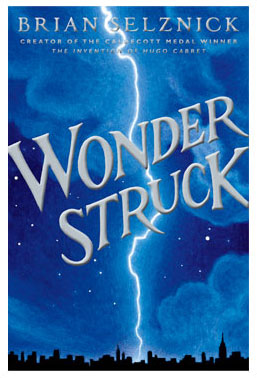
Wonderstruck by Brian Selznick (Also the illustrations inside are amazing.)
Fahrenheit 451 by Ray Bradbury

Les Miserables by Victor Hugo

Lunch Money by Andrew Clements

The Lightening Thief by Rick Riordan

2. What are your favorite book titles?
The Ranger’s Apprentice by John Flanagan
The Hiding Place by Corrie Ten Boom
The Secret Garden by Francis Hodgeson Burnett
Number the Stars by Lois Lowry
The Invention of Hugo Cabret by Brian Selznick
The Phantom Tollbooth by Norton Juster
3. Have you read a book and didn't know why they named it that and what was the title?
Lord of the Flies by William Golding, I don’t think the title ever made sense to me. (There's probably some connection that it has to the story, left there for the really clever people to figure out.)
4. Have you read a book with a character that made you mad?
Orpheus from Cornelia Funke's Inkheart series and Lavinia in Francis Hodgeson Burnett's A Little Princess were by far the worst, and Amy in Louisa May Alcott's Little Women ignited my vexation a few times in that book.
5. Is there someone or something from a book you would never want to come across?
A book character who I most likely wouldn't get along with at all in real life is chase from The Unlikely Debut of Ellie Sweet by Stephanie Morrill. The flying monkeys from The Wizard of Oz by Frank L. Baum are pretty creepy. Also the werewolf and the hag from Prince Caspian by C. S. Lewis. Actually there are evil things in almost every book that I would probably rather not cross paths with.
6. If you could meet a character in person from a book who would it be?
That is like not a broad question at all… Perhaps Jo from Little Women by Louisa May Alcott; as she was my very favorite book character for quite a long time, or maybe Michal from Claervont Captive by Bryce Roberts, because the dude just really needs a hug and a pat on the back.
7. What book are you currently reading?
The Book Thief by Markus Zusak, Jane Eyre by Charlotte Bronte, Emma by Jane Austen, various works of Shakespeare, and I’m rereading several books.
8. Have you read a book that made you cry?
Yes and no. I've never actually had tears rolling down my cheeks while reading, but my eyes have definitely misted over before. The closest I've come to actually crying was probably in a book that isn't published yet.
9. What is the weirdest book you’ve read?
The Marvelous Land of Oz by Frank L. Baum, and also Frankenstein by Mary Shelley was pretty weird.
10. What is the worst book/series you ever read?
I probably either didn’t finish it or forgot about it. I try not to dwell on negative things. But there's also a difference between least favorite and worst, the latter being harder to judge.
11. If you could only read one more book the entire year what would it be?
Oh gracious. Perhaps The Screwtape Letters by C. S. Lewis or a very long book like War and Peace by Leo Tolstoy or Les Miserables by Victor Hugo.
I'm tagging:
Emma at Lilac Ampersand
Avrie at Musings and Stories
Caleb at Being INFP and Thoughts A LotAlso, feel free to do the Spectacular Book Tag even if I didn't tag you, and leave a comment with the link!
Monday, March 7, 2016
Outlining
Outlines are important things. My first novel suffered immensely because I didn't plan it out at all. I respect the people who are the 'write-as-you-go' type.
For me, planning is crucial, as is organization. (It's almost pathetic how dependent I am on being organized.[I may or may not do a rough outline on blog posts before writing them.]) So I thought I'd share the novel-outlining system I devised a while back.

It starts with a story idea. (whoa, surprise surprise) If it's one I'm excited about and that I particularly like, I make a new document for it. I decide whether it should be a full-length novel, a short story, or something else. (For this post though, we're going to assume it's a novel.) The first thing I type into that document is a quick summary of my idea, a couple sentences long. For lack of a better word, I call it the log line, but it won't be used in pitching your story. These sentences are just for you, so that when you forget what you're writing about you can look back at the beginning of the doc and refresh your memory.
These next steps don't have to be carried out in any particular order, but I'm listing them in the order I have them in the document. So, second step I take is writing a synopsis. As opposed to the log line, the synopsis is what I'll send people when they want to know about the new story idea I'm working on.
In the synopsis, I try to give a preview of:
Now comes the more technical part of the outline. I always decide on a number of chapters and how many words I want in each chapter, on average. (For my current WIP, I'm going to have 12 chapters of around 2200 words each.) Then I decide how many main action points there should be within a chapter, depending on the number of words. I've found 4-5 is the amount of points that suits me. Ultimately, the number of action points actually in each chapter will change unless you're crazy strict about it, but it helps when outlining. An action point is a scene(or sometimes several scenes) that furthers the plot of the story along.
Once the novel is basically all plotted out chapter by chapter, I look over it and make a list of potential plot holes and things I'll need to work on more. And last but not least, I make a brainstorming list for title ideas.
So there you have it. A (hopefully helpful) method of outlining a novel. For a short story, I do things in a similar way, but less in-depth. I just sort of make a list of things that happen in the order that they will happen, and I obviously don't bother about chapters.
I was going to be all fancy and have a PDF for you to download with my outline framework, but that totally failed because I can't figure out things. But for your benefit, I have pasted it below.
Log line:
Synopsis:
Setting(time, place, genre)
Theme:
Character profiles, motivation, and backstories
List of extra scenes, setting ideas, random things you want to happen, etc.
Number of chapters:
Average word count for each chapter:
Number of action points within chapter:
~Actual Outline~
Chapter 1:
-First scene
-Action point
-Action point
-Action point
(continue this way for each chapter with the desired number of action points.)
Potential plot holes:
Title ideas:
For me, planning is crucial, as is organization. (It's almost pathetic how dependent I am on being organized.[I may or may not do a rough outline on blog posts before writing them.]) So I thought I'd share the novel-outlining system I devised a while back.

It starts with a story idea. (whoa, surprise surprise) If it's one I'm excited about and that I particularly like, I make a new document for it. I decide whether it should be a full-length novel, a short story, or something else. (For this post though, we're going to assume it's a novel.) The first thing I type into that document is a quick summary of my idea, a couple sentences long. For lack of a better word, I call it the log line, but it won't be used in pitching your story. These sentences are just for you, so that when you forget what you're writing about you can look back at the beginning of the doc and refresh your memory.
These next steps don't have to be carried out in any particular order, but I'm listing them in the order I have them in the document. So, second step I take is writing a synopsis. As opposed to the log line, the synopsis is what I'll send people when they want to know about the new story idea I'm working on.
In the synopsis, I try to give a preview of:
- The main character and other important characters
- Setting
- What they're up against
- What makes the story exciting
Now comes the more technical part of the outline. I always decide on a number of chapters and how many words I want in each chapter, on average. (For my current WIP, I'm going to have 12 chapters of around 2200 words each.) Then I decide how many main action points there should be within a chapter, depending on the number of words. I've found 4-5 is the amount of points that suits me. Ultimately, the number of action points actually in each chapter will change unless you're crazy strict about it, but it helps when outlining. An action point is a scene(or sometimes several scenes) that furthers the plot of the story along.
Once the novel is basically all plotted out chapter by chapter, I look over it and make a list of potential plot holes and things I'll need to work on more. And last but not least, I make a brainstorming list for title ideas.
So there you have it. A (hopefully helpful) method of outlining a novel. For a short story, I do things in a similar way, but less in-depth. I just sort of make a list of things that happen in the order that they will happen, and I obviously don't bother about chapters.
I was going to be all fancy and have a PDF for you to download with my outline framework, but that totally failed because I can't figure out things. But for your benefit, I have pasted it below.
Log line:
Synopsis:
Setting(time, place, genre)
Theme:
Character profiles, motivation, and backstories
List of extra scenes, setting ideas, random things you want to happen, etc.
Number of chapters:
Average word count for each chapter:
Number of action points within chapter:
~Actual Outline~
Chapter 1:
-First scene
-Action point
-Action point
-Action point
(continue this way for each chapter with the desired number of action points.)
Potential plot holes:
Title ideas:
Sunday, February 21, 2016
"I'm Fine"
I have noticed lately that a lot of people, when asked "How are you?" answer with simply "Oh, I'm fine."
Maybe most people are 'fine'. But really, 'fine' doesn't say much at all. Being a quiet person, I don't ask very many people how they are, so when I ask someone that, I actually want to know. I don't know what fine means. I want people to tell me what's going on in their lives. One word can answer the question, but it doesn't say anything. In the way of how life is going, 'fine' can mean a bajillion things. I often follow up "How are you?" with "What's the most exciting thing that happened this week?" since people don't take the question "How are you?" seriously anymore. We ask out of habit. Once I brushed past a lady in a grocery store and she said "Hey, how are you?" without even stopping to look at me.
I see a lot of posts on various social media sites(I realize that made me sound all hip and stuff but I'm not that up-to-date. I just look at Pinterest and Instagram sometimes.) that are along the lines of "I say I'm fine, but my mind is breaking apart. I smile, but inside, I'm in tears." It has really made me second guess people when they say they're fine. What also bothers me about that sort of post is that it encourages lying a bit. It's not truthful to tell people you're fine when you are not. Seeing posts with that idea could cause people to think it's all right to lie about how you're doing, when it isn't.

By no means am I saying I've never told someone I was fine when I wasn't. I know I have. And maybe it's because sometimes, we don't know how we are. That's how it is for me sometimes. It is, however, all right to simply say "I don't know". You aren't obligated to look 'put together' all the time. I guarantee you no one is as put together as they seem.
It always encourages me when I ask someone how they're doing and they say "I am doing fantabulous!" or some such. It inspires me that they're doing great and they realize that they are allowed to be happy and excited about life. When I see people like that, it makes me want to be able to say that I'm doing awesome too. But in order to say you're doing awesome, it has to be true, like with saying "I'm fine". Don't tell people lies.
Now, I don't mean you have to pour your heart out to random acquaintances who are just trying to make small talk. How will you build friendships with people though, if you can't even be frank with the way you feel at the moment? It's fairly hard to find words to say when you aren't fine and someone asks how you are. Perhaps brainstorm words that you can use instead. (because even if you are 'fine', it's a boring and undescriptive word.) If someone wants to know how I'm doing when I'm not doing so great, I usually just say I'm doing 'all right'. I know, it's not much different from fine. I'm working on that. But to me, 'all right' is 'could be better, but could be a lot worse'. And it's the only word that I can think of on the fly without sounding desperately sad. I'm going to figure out words to use in place of that too.
We don't have to tell everyone about our inner struggles. But we do need to tell the truth. It's hard to know who you can talk to about hard things and who you can't. However, it's important to remember that everyone is created in the image of God, and is therefore worth your time.(There are also people who are bad influences, but that is another matter.) Maybe it's better to talk about things other than one's health. If you're having a conversation face to face, chances are, both of you are at least well enough to be out in public, and neither of you is hacking into the other's face. So why not figure out other things to talk about? Perhaps start asking peoples' opinions on things. (probably not controversial things, if it's a new acquaintance you're speaking to.) Go deeper in your conversations than "How are you?" "Fine." "How was your week?" "Good." Those conversations never dip further than the surface of what a person is actually thinking.
I challenge you to find a new way to answer when someone says "How are you?", and also find a new way to ask. OR you can find something else to ask altogether. You get bonus points for that one.
So, with that... How are you?
Monday, January 25, 2016
Bucket Lists
Let us discuss bucket lists. I
believe that name comes from the term 'to kick the bucket'(or to die)
in that, it's a list of things you want to do before then. Don't quote
me on that. I never appreciated that name, because the title 'Bucket List' doesn't say anything to me. I actually picture a pail with a bunch of slips of paper in it. Titles are important, people.
I don't have a bucket list. *all of Pinterest collectively gasps* Now, I do have dreams. I have goals and aspirations, but I don't call it a bucket list. The closest I come to having a bucket list is drawing a jar and filling it with things I want to do before I graduate high school. However, that is called my Dream Jar. The name is a bit more descriptive/explanatory than 'Bucket List'.
I don't have a bucket list. *all of Pinterest collectively gasps* Now, I do have dreams. I have goals and aspirations, but I don't call it a bucket list. The closest I come to having a bucket list is drawing a jar and filling it with things I want to do before I graduate high school. However, that is called my Dream Jar. The name is a bit more descriptive/explanatory than 'Bucket List'.
Bucket lists irk me. The nature of them is what I have a problem with. A lot of the bucket list items I've seen are things like "pet an elephant", "have a paint fight", "go to Ireland". To me, bucket lists are a pile of things that people want to do 'sometime in my life' or 'before I die'. It sits, and only every now and then does one think about their static collection of random ideal activities. 'Before I die' is an abstract time. No one knows when they will die, therefore, having a list of things to do before then is impossible. There is no concrete plan involved. If you want to travel somewhere, save your money and research flights. If you want to have a paint fight, go find a can of paint and someone to combat. Schedule your bucket list activities so that they happen, otherwise, they won't. It doesn't even have to be really scheduled. Just put it in a basic time frame. Your bucket list will sink under a layer of dust, forgotten, pushed aside, deemed an accumulation of 'things that will happen sometime in the future' if you don't take action on it.
What is the purpose of doing the things on a bucket list? Is it to check off little boxes? Is it so that you can move that one Pinterest picture from your 'Bucket List' board to the 'Things I've Done' board? Not everything needs a purpose or reason, but many things do. Think about why you dream about what you dream about, and how you can glorify God by making your dreams come true.

What is the purpose of doing the things on a bucket list? Is it to check off little boxes? Is it so that you can move that one Pinterest picture from your 'Bucket List' board to the 'Things I've Done' board? Not everything needs a purpose or reason, but many things do. Think about why you dream about what you dream about, and how you can glorify God by making your dreams come true.

Bucket lists are not all terrible. Having hopes and dreams is great. But when you have a dream, assess whether you can take any steps to make it a reality in the present. Obviously there will be some dreams that have to wait. Have action plans if possible. "Don't let your dreams be dreams". I'm not saying one should never have a bucket list. I'm just saying we should treat them differently. Bucket lists are very lovely concepts.
For a long time, I was afraid to dream. Sometimes, people force others to dream, I've noticed. According to 'society', one must know what they want to be when they grow up. That must be one's biggest dream. When I was little, the only thing I wanted to be when I was older was a librarian and a mother. I didn't want to tell people that. My dreams weren't 'big enough' for them. So I simply didn't know. I still don't know what I want to be when I grow up, profession-wise. But I do know what I want to do. I want to encourage people. I want to create things. I want to inspire people to glorify God. I want people to know that they don't have to follow the patterns of the World. I want to be like the people who have touched my life in positive ways.
But do you know what? Those dreams and goals don't have to be 'someday, I will...' dreams. They can be now. Don't wait around for your life to get epic. Make it epic yourself. Ask God what He wants of you, and do your best for Him. Don't dream in the same way as everyone else. Make your dreams your own. The diversity of people is so incredibly beautiful, and you add to that.
Dream big. Dream small. Do it for God. But don't hold on too tightly to your dreams. You have to let go of your dreams in order for them to become reality. Keep in mind that not all dreams come true. Sometimes, God has an even better dream for you than the one you have to leave behind.
What do you think about bucket lists? If you have one, what prompted you to start it?
P. S. Announcement: I have devised a blogging schedule for myself. (crazy, I know) Yes, I decided to actually start posting regularly, so you may expect a post every other Monday. After outlining blog topic ideas for certain dates, I just know this year is going to fly by. It's somewhat terrifying. Anyway, for your convenience, there is the option to follow A Pen For The King by email; there should be a box on the side if you wish to get email updates. Or you can just stalk the blog every other Monday. That would work too.
Monday, January 11, 2016
Of Adventures
If you can't tell by the title, I'm about to explore the topic of adventures. First, let's start off with some definitions, courtesy of dictionary.com. I'm only using half of the ones listed in the article, if you want to see the rest, follow this link.
Adventure:
[spoiler alert, those who haven't read The Hobbit.] Going with the example of The Hobbit, Bilbo does get home, but he loses several friends along the way, and he continues to suffer the effects of the ring for the rest of his life.
[you're safe to read on now.]
New experiences are scary. It is very human to have a fear of the unknown. With God, we can face those fears. I like to think of new experiences as adventures. That means most of this year shall be an adventure. A perilous realm, if you will. I have an entire new year to explore with Christ, and so do you. That is an exciting thought. We get to be adventurers for Christ. Take risks, be brave. God's got this.
I have a challenge for you. Take an ongoing risk in some area of your life this year, whether it be in your writing, being more involved at your church, applying to a college, making a new friend... You get the idea. The adventure you choose should be geared to make you a better Christian.
I've decided to be more intentional in who I talk to. I want to make more of an effort to reach out to quieter people, because I'm one of them and I know how it feels not to be listened to. I've also decided that I want the stories I write to have strong themes.
What about you? What risk will you take? What adventure do you choose?
Adventure:
I'm sure many of you wish your life was more exiting and adventurous, or have at one time. I tend to dream of an exciting life, full of adventure and new things, until something new or exciting happens and I am forced to be adventurous. When I actually experience an adventure, I agree with the words of Bilbo when answering Gandalf, in J. R. R. Tolkien's The Hobbit.
the spirit of adventure.3. a bold, usually risky undertaking; hazardous action of uncertain outcome.v. 6. to risk or hazard. 7. to take the chance of; dare.
"I am looking for someone to share in an adventure that I am arranging, and it's very difficult to find anyone."
"I should think so—in these parts! We are plain quiet folk and have no use for adventures. Nasty disturbing uncomfortable things! Make you late for dinner!"Bilbo is quite right. I've had a few adventures in my life, and they aren't as fantastical and dreamy as the books make them out to be. Earlier this year, my family traveled for almost three months straight. That was an adventure. I started out somewhat excited, but by the second week, I simply wanted to go home. The truth of it is, adventures are often raw and dirty things that require sacrifice and perseverance. Even book characters experience the hardship of adventures.
[spoiler alert, those who haven't read The Hobbit.] Going with the example of The Hobbit, Bilbo does get home, but he loses several friends along the way, and he continues to suffer the effects of the ring for the rest of his life.
[you're safe to read on now.]
New experiences are scary. It is very human to have a fear of the unknown. With God, we can face those fears. I like to think of new experiences as adventures. That means most of this year shall be an adventure. A perilous realm, if you will. I have an entire new year to explore with Christ, and so do you. That is an exciting thought. We get to be adventurers for Christ. Take risks, be brave. God's got this.
I have a challenge for you. Take an ongoing risk in some area of your life this year, whether it be in your writing, being more involved at your church, applying to a college, making a new friend... You get the idea. The adventure you choose should be geared to make you a better Christian.
I've decided to be more intentional in who I talk to. I want to make more of an effort to reach out to quieter people, because I'm one of them and I know how it feels not to be listened to. I've also decided that I want the stories I write to have strong themes.
What about you? What risk will you take? What adventure do you choose?
Thursday, December 17, 2015
Book Review: The Unlikely Debut of Ellie Sweet
The Unlikely Debut of Ellie Sweet, by Stephanie Morrill kept me interested all the way through.
Only halfway through did I realize the book is the sequel to The Revised Life of Ellie Sweet, which I hadn't read. That being said, Mrs. Morrill did a great job filling in any gaps there may have been in my mind, and I didn't feel clueless as I sometimes do reading sequels before the preceding book.
I was especially drawn to Ellie's character. (It's not a coincidence her last name is Sweet, I can tell you that much.) Ellie shows strong values and truly cares for her friends. She had several things in common with me, including that she is a writer and stores a pen in her ponytail.
The story is definitely one of inner struggle rather than outward conflict. Ellie has a hard time keeping friends, and is torn over past friendships which have dissolved. Priorities also come into the picture as Ellie's book, in the works to be published, constantly demands her attention.
I didn't appreciate Ellie's dating life, mostly because her relationships seemed to move fairly quickly for someone her age. It was also because Ellie is rather close to my age, and I'm not planning to date anytime soon, so if I had to recommend a book to Ellie, it would be I Kissed Dating Goodbye, by Joshua Harris.
The way Mrs. Morrill writes social interactions is excellent. It's realistic, and it often made me feel like I was right there with the characters. The only thing I thought to be a bit unrealistic was that the high school seniors in the book mostly had their own cars and drove around wherever they pleased, often dropping by at each others' houses spontaneously. Being a homeschooler without a driver's license, I haven't experienced that world, but perhaps things are different in public school.
Another plus of the book was the chapter length. They were fairly short, allowing quick breaks which I have time for while still providing convenient stopping places. The frequent pauses for chapter breaks didn't deter me from spending a few late nights reading, though.
For me, the mark of a good book is one that requires a nice long walk afterwards to mull everything over. This book fell into that category, leaving me with that satisfied-but-not feeling. I loved how the book ended, but at the same time, I didn't want it to end. I'd give the second Ellie Sweet book 3.9 out of 5 stars.
To learn more about Stephanie Morrill, you can visit her website, or the Go Teen Writers blog which she regularly contributes to.
Subscribe to:
Posts (Atom)